Azerbaijan Tour Package
from Ahmedabad
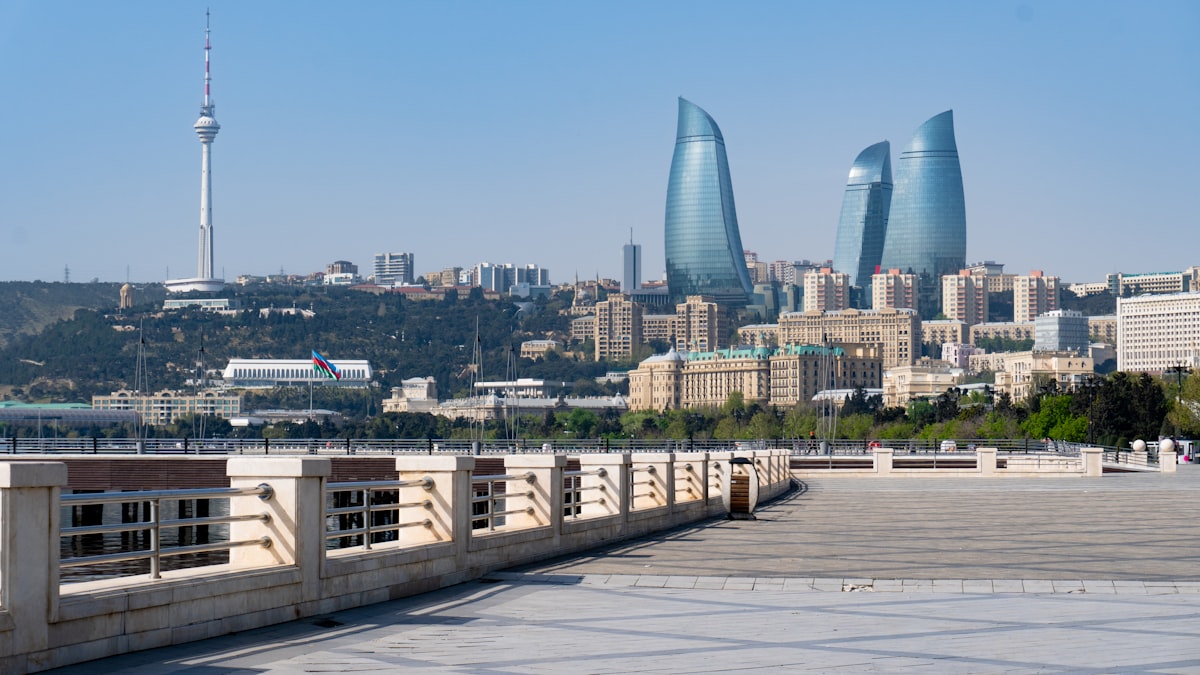
Baku's walled city beneath the Flame Towers, the Ateshgah fire temple, Yanar Dag's burning hillside — the Land of Fire, still genuinely offbeat.
Baku's walled city beneath the Flame Towers, the Ateshgah fire temple, Yanar Dag's burning hillside — the Land of Fire, still genuinely offbeat.
Azerbaijan is where the ancient world meets the future, and it does it more literally than almost anywhere — a country that has been burning since the dawn of recorded history and still has flames leaping from its hillsides. Baku, the capital, will stop you mid-step: medieval fortress walls rise directly across from glass flame-shaped towers, and the Caspian shimmers at every turn. For the traveller who's tired of the obvious circuit and ready for somewhere that still feels like a discovery, this is the trip — and it's risen fast up Indian travellers' lists for good reason: a short hop from India, an e-Visa among the simplest in the world, prices well under Europe's, and a depth of Silk Road history that rewards curiosity at every corner.
Our core Azerbaijan tour runs across three or four nights, built around Baku and two contrasting day trips. A typical route opens with a half-day Baku city tour — the old and the new of it — then gives a full day to the mountains at Gabala and another to the Absheron Peninsula's fire sites, with the warmth of Azerbaijani hospitality (genuinely among the most generous anywhere) threaded through the whole trip. It bends easily, too: travellers with more time add Sheki, the Silk Road town of caravanserais and the painted Khan's Palace, for a deeper, slower week.
Baku itself is the contrast that makes the trip. Inside the UNESCO-listed walls of Icherisheher, the Old City, the twelfth-century Maiden Tower and the Palace of the Shirvanshahs sit among cobbled lanes that have seen Marco Polo, traders and conquerors pass through. A few minutes away rise the Flame Towers — three glass skyscrapers lit with fire animations every evening — and the Heydar Aliyev Centre, Zaha Hadid's great white wave of a building, one of the most extraordinary structures anywhere. Few cities hold the medieval and the futuristic so close together, or so comfortably.
But the reason Azerbaijan resonates particularly with Indian travellers is fire. At the Ateshgah Fire Temple, a pentagonal shrine built around a natural gas vent that has burned since antiquity, the inscriptions are in Sanskrit and Punjabi — for centuries this was a place of Hindu, Sikh and Zoroastrian worship, tended by Indian merchants on the Silk Road, and standing there is a genuinely uncanny experience for a Hindu visitor. Nearby, Yanar Dag — the "burning mountain" — is a hillside where natural gas has flamed continuously for thousands of years, a roaring curtain of fire most dramatic against a dark winter sky. This is the "Land of Fire" made literal, and it's unlike anything else you can reach in five hours from home.
Two practical truths. First, the season shapes the trip: April to June is the best overall window — warm days, blooming landscapes, ideal for both Baku and the Gabala mountains — with September to November a close second for autumn colour and easy availability; July and August are hot in Baku (though Gabala stays cool), and December to February is cold but is precisely when Yanar Dag's flames look most spectacular against the dark. Second, the practicalities are refreshingly light — the e-Visa is genuinely among the world's simplest, the flight is short, and the value is excellent next to a European city break of the same length. On food, Baku has a growing set of Indian and vegetarian options, which we map to your route, though the variety is thinner than in South-East Asia and worth planning around — and the local plov, fresh breads and the ceremonial tea culture are worth trying alongside. Baku rewards slow evenings, too: the Caspian-front Boulevard for a sunset stroll, the Carpet Museum shaped like a rolled rug, and the old city's teahouses, all of which we fold in without rushing. Travellers with an extra day can add Gobustan, the UNESCO-listed plain of prehistoric rock carvings beside a field of bubbling mud volcanoes — one of the strangest half-days within reach of Baku — which we arrange on request rather than padding the base trip with it.
For families and couples alike, Azerbaijan works as the trip that surprises — the contrast of the old city and the flame towers for everyone, the cable car and waterfalls at Gabala for younger travellers, the fire temples for those drawn to the spiritual thread. It's the considered traveller's offbeat choice: somewhere your friends probably haven't been yet, planned so it feels like a discovery rather than a gamble.
The UNESCO-listed medieval walled city — the twelfth-century Maiden Tower, the Palace of the Shirvanshahs, cobbled lanes that have seen Marco Polo and a thousand years of Silk Road traffic. The ancient half of Baku's great contrast.
Three flame-shaped glass towers lit with fire animations across the skyline each night, and Zaha Hadid's Heydar Aliyev Centre — a building that looks poured rather than built, all white curves and no straight lines. The futuristic half of Baku, a few minutes and several centuries from the Old City walls, best seen at dusk when the towers begin to burn.
A pentagonal stone shrine built around an eternal natural-gas flame, its cells inscribed in Sanskrit and Punjabi, tended for centuries by Hindu and Sikh merchants who travelled the Silk Road from India — a Zoroastrian, Hindu and Sikh place of fire worship that lands with a genuine, uncanny resonance for an Indian visitor. Few foreign monuments feel this close to home.
A hillside where natural gas has burned without pause for thousands of years — a roaring wall of flame straight out of the rock, at its most dramatic against a dark winter sky. The "Land of Fire," made completely literal.
A full day's contrast to the city — the Tufandag cable car rising over forested slopes to mountain-top views, the still green water of Nohur Lake, the tiers of the Seven Beauties Waterfall, and the cool Caucasus air. A few hours from the Caspian and a world away from it, and the day younger travellers tend to love most.
For longer trips: the stone caravanserais where Silk Road traders once slept, the exquisitely painted Khan's Palace with its stained-glass shebeke windows, and the green Caucasus foothills around them — the historic town that rewards travellers who give Azerbaijan a slower, fuller week. Offered as an honest two-night extension, not squeezed into the base trip.
Download a sample itinerary for Azerbaijan — pacing, day-by-day notes, what's included, and how we'd reshape it around your dates and your style.