Gujarat Tour Packages
Rann · Gir · Heritage
The white Rann under a full moon, Asiatic lions at Gir, Dwarka and Somnath by the sea — our home state, known the way only locals know it.
The white Rann under a full moon, Asiatic lions at Gir, Dwarka and Somnath by the sea — our home state, known the way only locals know it.
Gujarat is the land of paradoxes — a desert that turns white under a full moon, temples that have survived the rewriting of history, forests where Asiatic lions still roam, and cities where five-thousand-year-old civilisations echo in every stone step. It contains more UNESCO World Heritage Sites than most Indian states — Dholavira's Harappan ruins, the Rani ki Vav stepwell at Patan, the walled Old City of Ahmedabad, the Champaner-Pavagadh archaeological park — the world's only wild Asiatic lions, one of the planet's largest salt deserts, India's most sacred Jyotirlinga temples, and the richest folk-craft tradition in the subcontinent. And yet it remains criminally undervisited next to Rajasthan. That's the opportunity, and it's the trip we most love to build.
Here's the thing we can say about Gujarat that we can't say about anywhere else: it's home. We're based in Ahmedabad, and Gujarat is the one destination we know the way only locals do — the best dhaba for lunch on the coast road down to Somnath, the forest-department contact who secures your Gir safari permit before the online quota sells out, the hidden Jain temples in Palitana the guidebooks never mention. On every other page we plan trips; on this one, we're showing you around our own state. A typical circuit runs across six to eight nights as a coastal loop — Ahmedabad's heritage core, west to Dwarka for two nights, down to Somnath on the Arabian Sea, and into Sasan Gir for the lions before the loop closes back in Ahmedabad — and it bends easily to whatever you're really here for: heritage, wildlife, pilgrimage, or the desert.
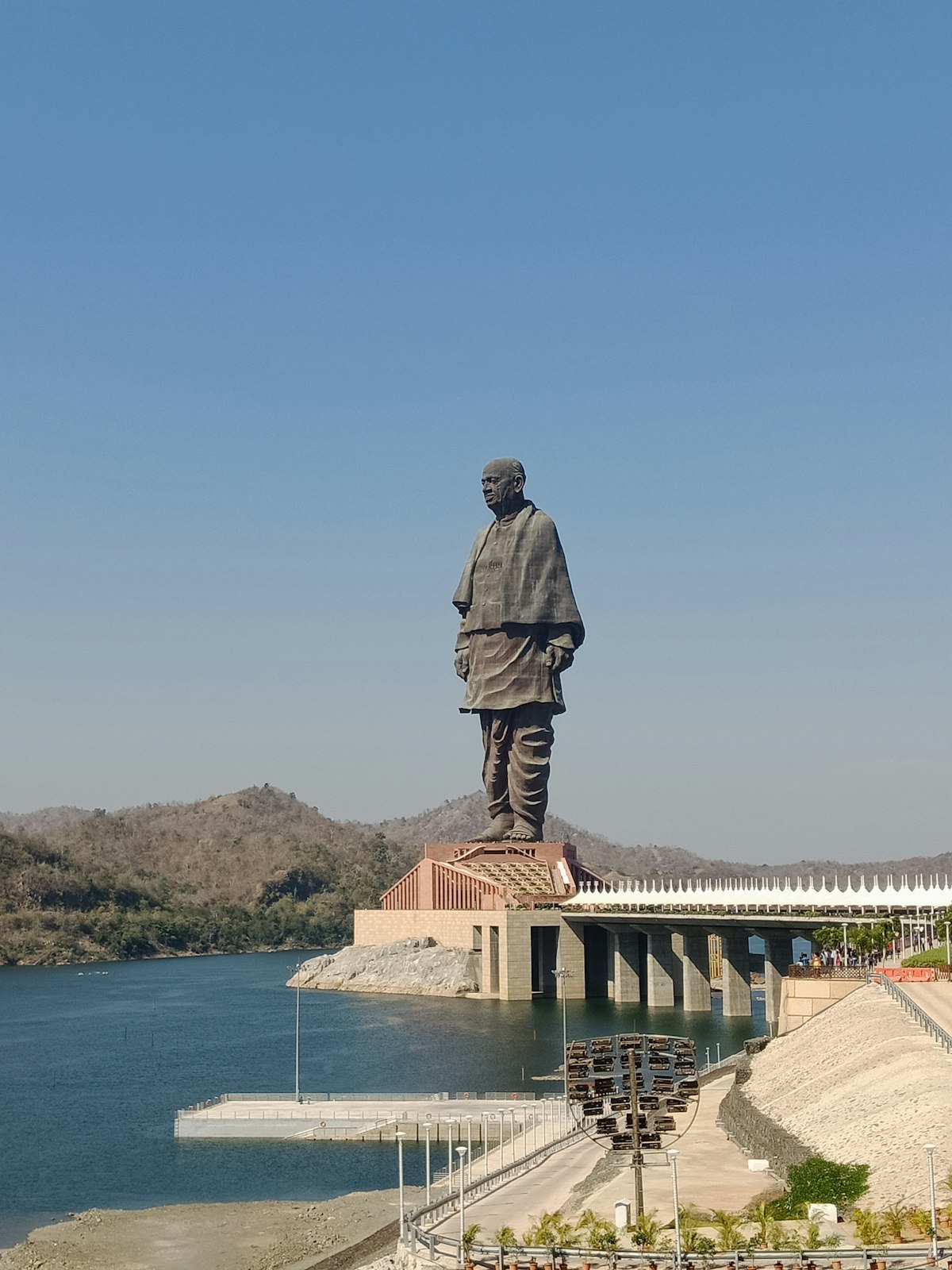
The named highlights each earn their place. The Rann of Kutch, one of the world's largest salt deserts, is at its most otherworldly under a full moon during the Rann Utsav (November to February) — a tented festival of folk music, craft, camel rides and Gujarati food at the desert's edge, which we plan as its own dedicated two-to-three-night extension. Gir National Park is the only place on earth outside Africa to see lions in the wild, and the safari permits are tightly limited — we manage the Forest Department booking for every client. Somnath, the Jyotirlinga rebuilt seven times across history, stands right on the Arabian Sea, and its evening light-and-sound show against the sound of the waves is one of India's most moving heritage hours; Dwarka, one of Hinduism's four sacred Dhams, completes the pilgrimage spine. And the Statue of Unity — at 182 metres still the tallest statue in the world, the tribute to Sardar Patel on the Narmada — anchors the trip's modern marvel.
Two practical truths. First, the season is clear-cut: October to March is ideal across all regions, with the Rann Utsav running November to February and Gir's safari season October to May; April to June is fiercely hot (40–45°C) and Gir closes through the monsoon, when the Kutch desert floods into a mirror instead. Second, Gujarat travels beautifully for the kinds of trips that don't fit anywhere else — a pure pilgrimage circuit (Somnath, Dwarka, Nageshwar, Ambaji, the Girnar climb, and Palitana, the world's only city where slaughter is banned), a wildlife-and-heritage week, or a comfortable three-night Rann weekend — and being a strongly vegetarian state, it's the easiest place in India to travel for a pure-veg or Jain family.
Beyond the headline sights, Gujarat rewards travellers who care about craft and antiquity more than almost any state in India — and these are the threads we weave in when they fit. The Sun Temple at Modhera, its stepped tank and carved hall aligned to the equinox light. The thousand-year-old Rani ki Vav at Patan, the most intricate stepwell in the country and a UNESCO site, near the looms where a single double-ikat Patan Patola sari still takes months to weave. The hilltop ruins of Champaner-Pavagadh. Dholavira's Harappan grid out in the Kutch salt flats. The mirror-work and embroidery of the Kutch artisan villages. And the cool hill retreat of Saputara when the plains turn hot. It's a state with more genuine depth than a week can hold — which is exactly why local knowledge, not a generic circuit, makes the difference.
For families and multi-generation trips, Gujarat is unusually rewarding — Ahmedabad's UNESCO-listed Old City and Gandhi's Sabarmati Ashram, the stepwells at Adalaj and Patan, the Sun Temple at Modhera, the lions at Gir, the white desert at Kutch — all close enough to thread into one unhurried circuit, all known to us first-hand. We're not reading you a brochure of our own state. We're handing you the version we'd plan for family visiting from out of town.
The Great Rann of Kutch — one of the world's largest salt deserts — glowing white under the full moon during the Rann Utsav, with folk music, mirror-work craft stalls, camel rides and Gujarati food at the desert's edge, and a hot-air balloon over the white at dawn. Planned as its own luxury-tented extension, timed deliberately to the full moon.
The only place on earth outside Africa to see wild lions — a dawn jeep safari through the teak and acacia of Sasan Gir, permit secured for you in advance through the Forest Department before the limited quota sells out — and, for those who want a near-certain sighting, the Devaliya interpretation zone as well. The wildlife experience no other Indian state can offer.
The Statue of Unity — 182 metres on the banks of the Narmada, the tribute to Sardar Patel and still the tallest statue on earth — with the viewing gallery, the Sardar Sarovar dam, and the valley laid out below. It sits off the coastal loop, so we run it as a day out of Ahmedabad and quote it separately.
The Somnath Jyotirlinga, rebuilt seven times through history, on the Arabian Sea — its evening light-and-sound show set to the sound of the waves — and Dwarka, one of Hinduism's four sacred Dhams. The pilgrimage heart of the trip.
India's first UNESCO World Heritage City — the walled Old City and its pols, Gandhi's Sabarmati Ashram on the river, the carved stepwell at Adalaj, and within reach the Rani ki Vav at Patan and the Sun Temple at Modhera. The layered heritage of a place we know street by street and dhaba by dhaba, shown the way a local would show family.
A small island of Portuguese forts, white-sand beaches and old churches on the Saurashtra coast — utterly unlike anything else in Gujarat, and a gentle two-night extension at the end of the coastal loop.
Download a sample itinerary for Gujarat — pacing, day-by-day notes, what's included, and how we'd reshape it around your dates and your style.